Red Light
630–660 nm- Enhances circulation and oxygenation
- Supports tissue regeneration and cellular repair
- Stimulates collagen and fibroblast activity
- Explored for inflammation, skin health, cognition, hair vitality, pain, and muscle recovery

Light has a measurable effect on how cells produce energy, how blood flows, and how the body manages inflammation. At Bionuu Clinic, specific wavelengths are selected for each patient as one part of a broader, physician-led plan.

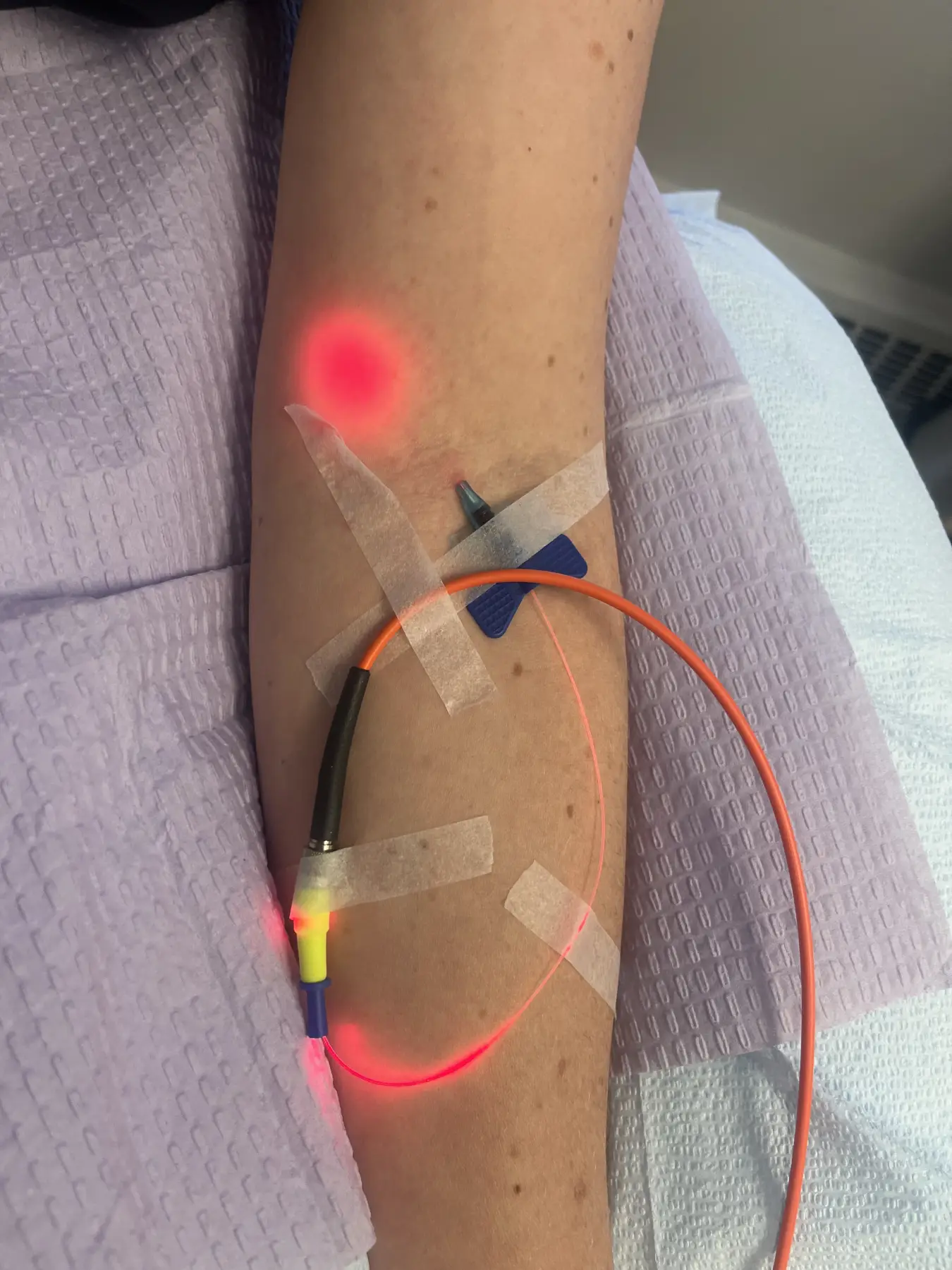
Intravenous light therapy, sometimes called Weber laser therapy after the systems developed by Dr. Michael Weber, delivers low-level laser light of a specific wavelength either directly into the bloodstream through a small IV catheter, or through the skin using external applicators.
Different wavelengths are absorbed by different molecules in the body, which is why color selection matters. Red and infrared light are absorbed largely by mitochondria, the structures that generate cellular energy. Blue and ultraviolet light interact with microorganisms and immune cells. Because each color behaves differently, the wavelength is chosen to match what your evaluation shows, and more than one may be used across a course of care.
Light therapy is not a stand-alone treatment for any disease. At our Denver clinic it is used as one component of an integrative plan that also addresses nutrition, sleep, hormones, and other underlying factors, and it does not replace care from your primary physician or specialist.
Light therapy suits some people well and is not appropriate for others. That determination is made during your consultation in Denver, not in advance.
Patients dealing with persistent inflammation, slow recovery, low energy, or lingering infections, who are already working on the foundational pieces and want to know what else may support the process.
Light therapy is often combined with IV nutrient therapy, ozone therapy, or hormone support, and is coordinated around any treatment you are receiving elsewhere.
Photosensitizing medications, a history of light-sensitive conditions, pregnancy, active malignancy, or certain blood disorders all warrant a careful discussion before proceeding.
Several common medications increase light sensitivity. Bringing an accurate list, including supplements, is one of the most useful things you can do before a first visit.
Light therapy is not offered as an alternative to conventional treatment for any condition. If you are under the care of an oncologist, cardiologist, or another specialist, supportive care is planned around their recommendations, not in place of them.
Each color below is a distinct clinical tool with its own absorption profile and its own areas of research interest. The notes describe what each wavelength has been studied and explored for, not outcomes you should expect.
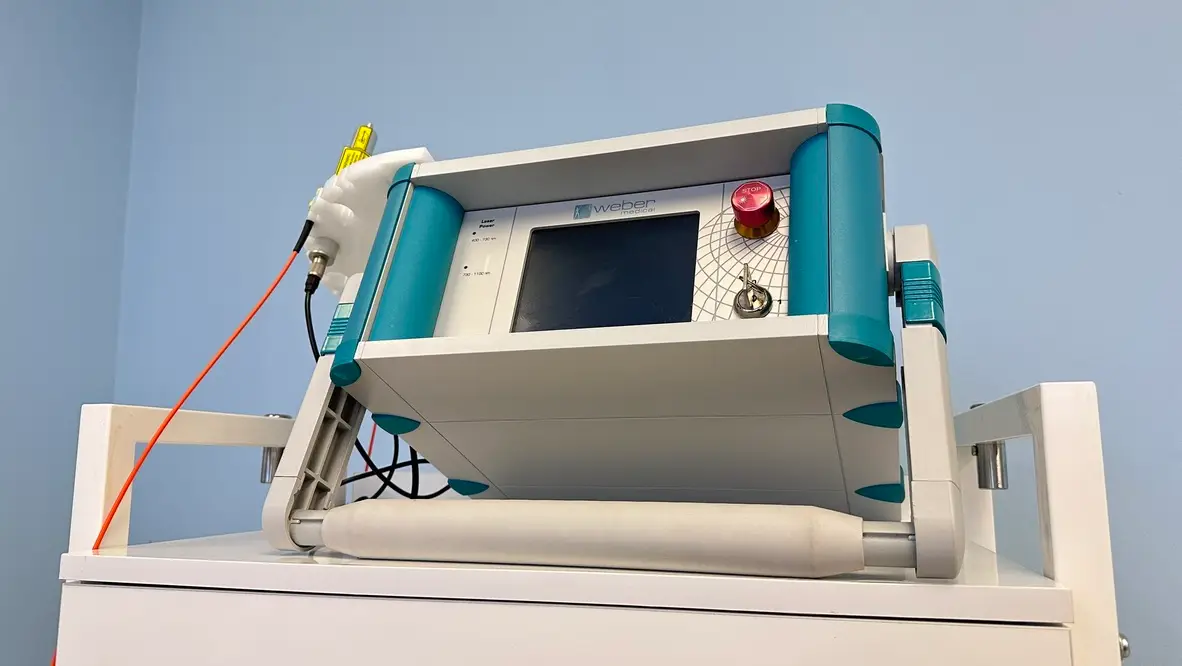
We use the Weberneedle® Endo system, one of the most advanced devices for medical laser applications. For more details and clinical examples, visit WeberMedical.com.

Light therapy is not a walk-in treatment. Every course at our Denver clinic begins with an evaluation, and the wavelength is chosen only after your physician understands what she is working with.
Dr. Simion-Rodgers reviews your health history, current medications, prior testing, and what you are hoping to address. Laboratory testing is often part of this step.
Based on that review, one or more wavelengths are selected, along with the delivery method: intravenous through a small catheter, or external applicators placed over the treatment area.
Sessions are typically comfortable and most people sit and rest throughout. If an IV catheter is used, placement feels similar to a routine blood draw. Session length depends on the protocol.
Light therapy is usually given as a series rather than a single visit. Progress is reviewed as you go, and the wavelength, frequency, or the wider plan may be adjusted.

With a background in Family Medicine and Psychiatry and more than 20 years in integrative and functional medicine, Dr. Simion-Rodgers selects and oversees every light therapy protocol at Bionuu Clinic in Denver. Her advanced training includes intravenous medicine, ozone therapy, and the Metabolic Approach to Cancer through the Metabolic Terrain Institute of Health.
Meet the DoctorPhysician-guided nutrient infusions, frequently paired with light therapy in the same visit.
Signaling molecules selected to support specific biological pathways.
Medical ozone used as part of an integrative approach to immune function and cellular repair.
Integrative oncology support, coordinated around your oncology team's plan.
Most patients find sessions comfortable. When light is delivered intravenously, a small catheter is placed much like a routine blood draw, and the light itself is not felt. External applicators are painless, though some people notice mild warmth.
The wavelength is selected by your physician after reviewing your history, goals, medications, and any laboratory testing. Because each color is absorbed differently in the body, the choice depends on what your evaluation shows. Some plans use more than one wavelength over a course of care.
This varies considerably depending on the wavelength, what you are addressing, and how you respond. Light therapy is generally given as a series rather than a one-time visit, and the schedule is reviewed as you progress rather than fixed in advance.
Often, yes. Light therapy is frequently used alongside IV nutrient therapy and ozone therapy, sometimes within the same visit. Whether combining therapies makes sense for you is part of the planning conversation.
UV is the most intense wavelength used and is handled accordingly. It is given only in very specific, low doses under direct clinical supervision, and only when your evaluation supports it. It is not used routinely or at patient request.
Consultations and in-clinic therapies at Bionuu are not billed through insurance, as these services are generally considered outside standard coverage. Costs are discussed before beginning any service. For laboratory testing that may be covered, you may use your own insurance, and Bionuu does not add a markup to those laboratory charges.
Yes. Bionuu Clinic cares for patients throughout the Denver metro area, including Denver, the Denver Tech Center, Cherry Creek, Greenwood Village, Cherry Hills Village, Highlands Ranch, Littleton, Englewood, Lone Tree, Aurora, Lakewood, and Parker. Because light therapy is delivered in person, consultations may be done remotely for Colorado residents but sessions take place at the clinic.
Bionuu Clinic offers intravenous and Weber laser light therapy to patients across the Denver metro area. Because sessions are delivered in person, most patients plan a short series of visits to the clinic.
Important: The wavelength descriptions on this page summarize areas of research interest and reasons patients ask about light therapy. They are not claims that light therapy treats, cures, or prevents any disease, and many of these applications are still under investigation. Individual results vary, and light therapy is not appropriate for everyone. Nothing here is medical advice or a substitute for care from your physician. Always discuss your specific situation with a qualified healthcare provider before beginning any new therapy.